
Piriformis syndrome continues to be a controversial diagnosis for sciatic pain. Given the fact that nerves and blood vessels accompany the PM, contracture of the latter can have widespread effects. Clinically, PS presents itself with pain (and paresthesias) in the buttocks, hips, and lower limbs. Electrophysiological testing and nerve blocks play important roles when the diagnosis is uncertain. Clinicians should be aware that many etiological factors are involved, which may be possible to modify or treat. Most patients respond to conservative measures, including nerve blocks, whereas surgical treatment is seldom necessary and often disappointing. Anesthesiologists are commonly involved in the management of PS due to their expertise in pain management and in carrying out nerve blocks. Injections of local anesthetics, steroids, and botulinum toxin into the PM muscle can serve both diagnostic and therapeutic purposes. The practitioner should be familiar with variations in the anatomy and the limitations of landmark-based techniques. An ultrasound-guided injection technique has recently been described, which offers improved accuracy in the nerve blockade. This technique has been shown to have both diagnostic and therapeutic value in the treatment of PS. Optimizing the therapeutic approach requires an interdisciplinary evaluation and treatment.
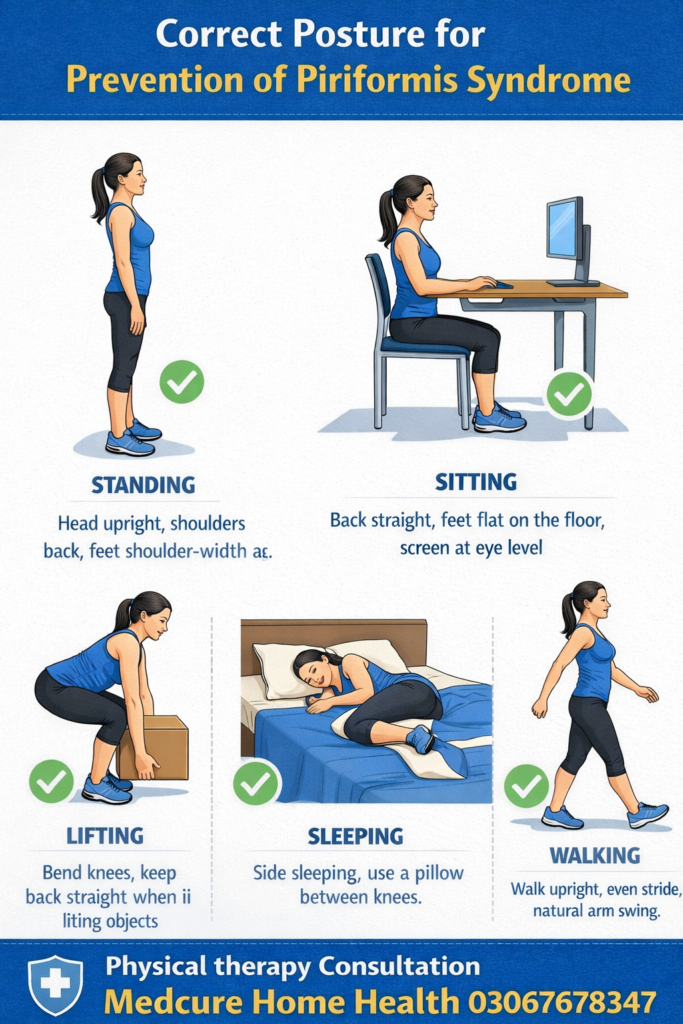
Correct Preventive Posture for Piriformis syndrome:
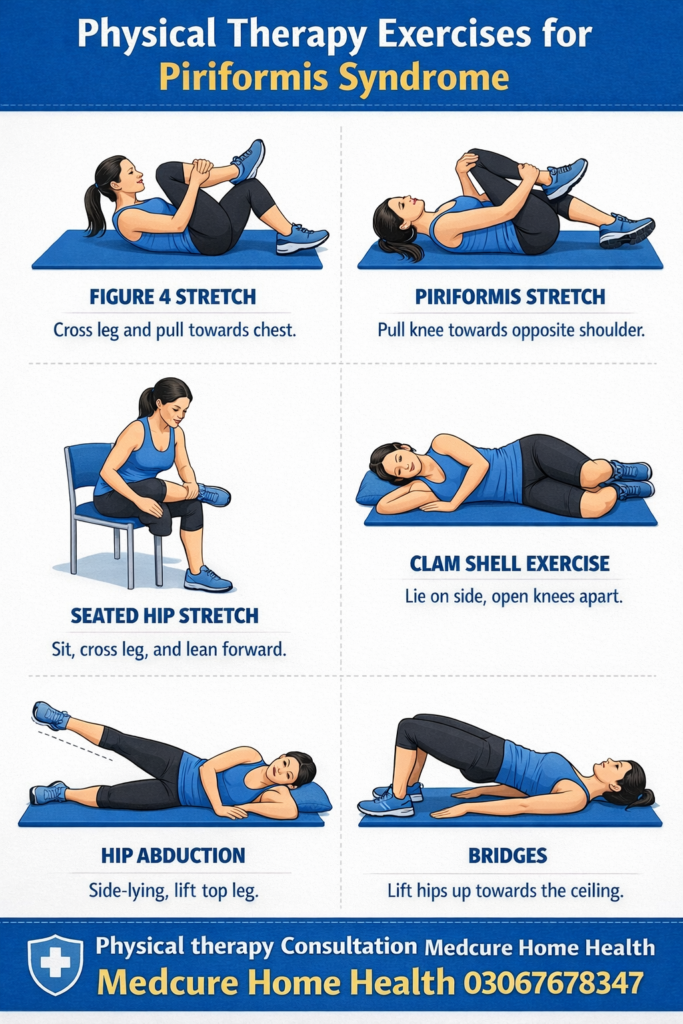
Physical Therapy Exercises: